Powered By Blogger
Showing posts with label migration. Show all posts

Monday, March 23, 2015

Estonian spring arrives ten days early!!


The end of February and the beginning of March have been consistently mild, the ice is running from water-bodies one after another and most of the landscape in Estonia is already snowless. As a result, active movement of migratory birds has been noticed everywhere.

Skylark and Lapwing have been around for some time already, while Greylag, White-fronted and the Bean Geese have arrived more recently. Whooper and Bewick’s Swans are also arriving, in addition to the more locally dislocated Mute Swan. Various duck species such as Mallard, Teal and Wigeon are also arriving in numbers. Last week has added Starling, Coot, Bittern, Woodcock and  Common Crane to the migrant list.

Whooper Swans (Cygnus cygnus)
Photo: Luke Massey

Common Cranes (Grus grus)
Photo: Arne Ader

By the end of March more migrants should arrive at their northern breeding areas. Species like White and Black Storks, White Wagtails, Avocets, Lesser Spotted Eagles and many others are not far from their final destination.

The first bears have awakened already from hibernation. 


Brown Bear / Photo: Jack Hill

Friday, December 19, 2014

I was simply amazed at the beauty of Estonia...


“Both Stephen and I have travelled widely and seen a lot of the World’s natural wonders and wildlife. But this holiday will stand out for the reasons I have given below. So, it remains for me to thank you all very, very much for giving us such a wonderful holiday. I’ll never forget it…

I was simply amazed at the beauty of Estonia, especially as the leaves changed colour. As you may know I was particularly interested in the history of the country and its past politics. Despite the challenges, it has become a lively, successful and optimistic country. You can feel the will to succeed and we found the Estonian people charming. I think Stephen will confirm that we felt a real ‘bond’ with the people of your country.

A view to the Kabli bird station Heligoland trap. Photo: Wilf Powell

It was a great group of people and we shall keep in touch with them. All were relaxed, happy, enthusiastic and interesting people. So easy to get on with and we thoroughly enjoyed their company. Tarvo and his incredible level of skill were indispensable to the enjoyment and value of the trip. Without those skills and his hard work, we would not have got the high level of value and enjoyment that we did from the adventure. And both he and the lovely lady at the farm in Kihnu coped so well with the enforced change of plan due to the weather. I really liked the hotels you organised, especially the distillery and the farm stay was great. The migration was terrific to experience for me and summed up when we came across that little still-warm Goldcrest that had died that morning and just couldn’t make it! Nature can be both cruel and humbling…

The smallest passerine in Europe – Goldcrest. Photo: Stephen Judd
 
Tallinn was lovely and the hotel you booked us was excellent and the staff great and so helpful. We really enjoyed the football and mingling with the fans of both England and Estonia. The tickets were good and the tasty food and free beer much enjoyed. Thanks very much for getting them for us. They were most appreciated. We didn’t get to see the art museums after all, but the walking tour you organised was great. We especially liked the wooden coat of arms in the church and of course the cathedral. We also thoroughly enjoyed the Seaplane Museum, which is quite unique!

My intention is to visit again, possibly in the Spring, to see the things we missed and re-visit some and would contact you to sort out something for us. I’d really like to go in search of bears and other mammals as well as bears.”
 
Mike and Stephen J. Autumn 2014 - Migration Hotspots in Estonia

Click here to read Migration Hotspots in Estonia Tour report...

Thursday, October 16, 2014

Migration Map News


On the current migration map the autumn season started in mid-July. Our new Osprey named Tiiu has surprise us all as no previous Estonian Osprey has gone to western Africa. Seems Tiiu wants to stay in Cote d'Ivoire. 

The hybrid Spotted Eagle (mix between Greater and Lesser Spotted Eagles) Tunne started in July and used quite a different migration route to last year, flying first northwards, from Russian Kaliningrad oblast to Latvia and then stopping near the Bosporus in Turkey. Last year he wintered 750km westward, in Montenegro.


Our Black Stork, Raivo, was rather late with breeding this year and therefore started his journey south quite late too.  He made good time with his travels however and arrived at his wintering grounds in Near East, Jordan Valley by 15th September.  A new Black Stork on the map is from Slovenia, his name is Francek. Francek started to migrate in 8th August and took quite a dangerous route over southern Italy and Sicily. According to the data Francek stopped over in the Rosmarino River mouth in northern Sicily. Probably that was caused by stormy weather there, but after awhile Francek continued his journey. He is in now in northern Tunisia.

Our famous Crane Ahja 4, began migration on 24th Sept and moved from Estonia to Belorussia. It will be interesting to see where he winters this year as last winter he spent wintered in Ethiopia together with its parents.

Lesser Spotted Eagles (LSE) are migrating quite close to each other and the distance between individuals has shortened during migration to just two-three days. There are more LSEs on the map than earlier as satellite tags were being used to collect data about their home range and the migration data is extra information. For LSEs it is typical that they avoid crossing even short expanses of water and will ganerally prefer an overland route even if it is longer.  For example they don't like crodssing the Suez Gulf even thought he width is only 20-40 km, but fly round it, whereas Black Storks do not avoid Suez Gulf, but choose better weather and wind to make the crossing.

The Greater Spotted Eagle Iti started slowly migration nn 3rd October. There is still no data about Tõnn, probably our most famous bird during the years... 


Thursday, November 21, 2013

Birds and Mammals in Estonia 4-11 October 2013

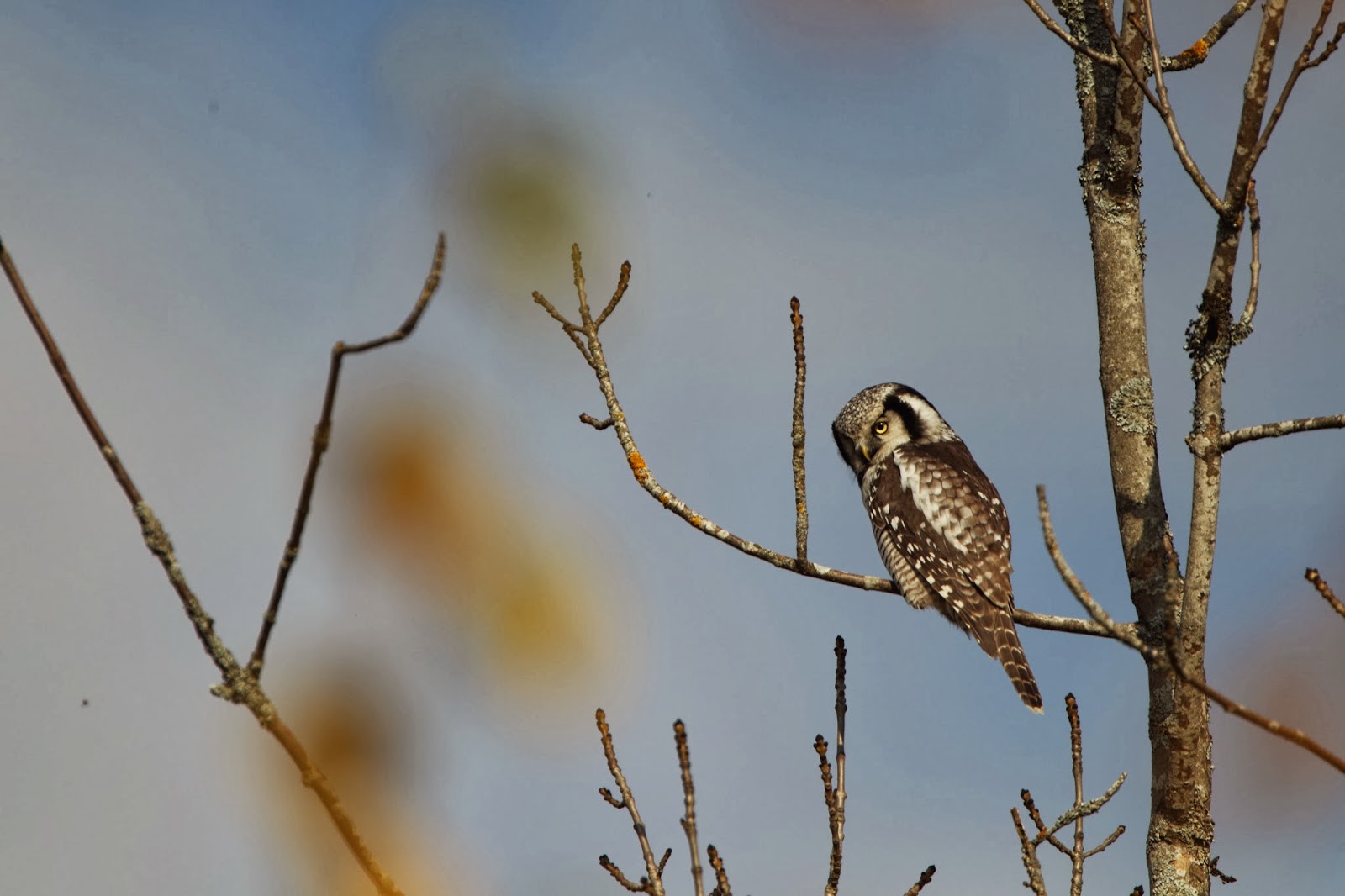
Early in October Luke Massey Images and Tarvo Valker led a Bird Watching magazine readers group around Estonia searching for an array of different birds. They hit the jackpot spotting over 100 species of bird including Hawk Owl, Golden Eagle, Parrot Crossbill, thousands of Barnacle Geese and many more. Though it wasn't just birds they found, amazingly the group saw a great number of mammals, including Elk, Foxes, Arctic Hares, Bears, Pine Martens, Beavers and even the extremely rare and elusive European Flying Squirrel. Autumn is a fantastic time to visit Estonia as birds are migrating through and mammals are out feeding before winter kicks in. See which tour suits you, from photography to orchid spotting.

„Last two days: amazing. Saw two brown bears, 6 raccoon dogs, pine marten, fox and a flying squirrel. All in all 12 different mammals and 105 species of birds. Best part of it: chasing the hawk owl with Luke trough the wilderness.“  B.H / Germany


Hawk Owl (Surnia ulula) / Luke Massey


"On our first morning we witnessed a great sunrise right outside the hotel as it rose over the Baltic. As I was photographing the sunrise I heard the unmistakeable calls of cranes, moving out of their roost site to go feed in the surrounding fields. Cranes are making a comeback in the UK, with around 50 now living wild after a a successful reintroduction project." L.Massey / UK


Common Cranes (Grus grus) / Luke Massey


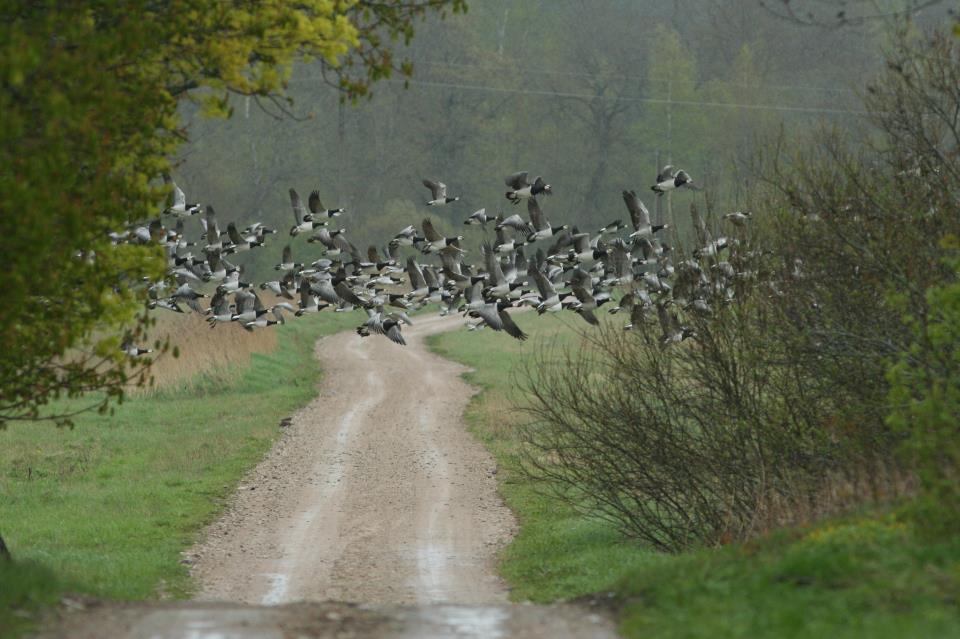
"Estonia is one of the top 10 destinations in the world for bird migration with hundreds of thousands of birds passing through every spring and autumn. Probably the biggest migration is of barnacle geese, throughout our time in the country we saw thousands of them either flying over or carpeting fields feeding up before continuing on their way." L.Massey / UK


Barnacle Geese (Branta leucopsis) / Luke Massey


"We managed to see loads of different stuff from European flying squirrels to hawk owls. I think the highlight for most of the group were the bears, we were incredibly lucky to see 2 bears and one appeared in broad daylight. Not wanting to scare it I didn't take any photos, so this shot is one of the only one I got at dusk at 1/8 second!" L.Massey / UK


 Brown Bear (Ursus arctos) / Luke Massey


Monday, February 18, 2013

Migration Map News – Summary of Autumn Migration


It is always fascinating to see what the birds we are following on Migration Map are doing and we started the autumn following 23 birds 7 of which were juveniles. The largest proportion of juveniles was amongst Common Cranes but we know well that due to natural selection a large proportion of juveniles do not reach their wintering grounds and only two cranes, Ahja2 and Juula2 have made it. Both of them are wintering in Tunisia, though Ahja2 spent last winter in Turkey. Changes of wintering grounds have also been recorded amongst Finnish Cranes.

One of five Ospreys, Ilze form Latvia, perished in Calabria, southern Italy. She was probably shot and injured and did not recover. Unfortunately the transmitter was not found, though twice our Italian colleagues tried to locate it. A second Latvian Osprey, Eriks, was lost in Gabon in October. We hope he is out of network area and will be visible again when he starts his spring migration. Estonian Ospreys winter in Africa, Ilmar in SW Angola, Piret and Erika in Sudan. Piret was also out of network area for 40 days until she went 200km northwards to winter. Piret made an interesting about turn on her migration when she reached the Sahara and turned suddenly turned back travelling 1200km. At the moment there is no data about what the weather was like at that point there, but something induced such a long extra trip. Her journey back to the Nile Delta seemed to be a struggle against dominant northerly winds.


The Black Storks are wintering in their usual places, Raivo near the fish ponds in the Jordan Valley, Priidu in Sudan and Central African Republic and Pirsu in Chad and Cameroon.

The juvenile White-tailed Eagles, Sillu and Meelis, did not migrate much (we think), but the transmitters on them are not working very well, and we don’t know their most recent movements. The last positions we have from November are that Sillu was in the Kaliningrad region of Russia and Meelis was on the Russian coast of Pskov Lake. We hope to see the birds again when they return in spring.

Among Greater Spotted Eagles probably the most interesting is the juvenile Tore, who we believe to be the brother of Tõnn. We lost him in Switzerland, after he was observed for a long time near Lake Constance by local bird watchers. We suspect the problems with the transmitter maybe shortage of sun light for the solar charger. Tõnn and Iti are wintering in their usual sites. Sander is the first GSE we followed from Estonia and is wintering in Africa. The wintering site of the Osprey Piret is only some 200 km SE of Sander.

Lesser Spotted Eagles Karin and Magnus made typical migrations for their species and arrived in southern Africa. The wintering area is large, including several countries (Zambia, Zimbabwe, Botswana, Namibia, South-African Republic). The hybrid Spotted Eagle Luule hit serious problems trying to cross the Ionian Sea from Greece to Sicily in December and sadly may have drowned. 

It is only a couple of weeks before some of these birds may start their spring migration...
Click here to see migration map...

Source:  Estonian Ornithological Society / The Eagle Club


Tuesday, January 29, 2013

Estonia is selected one of the 30 world's most dramatic locations for bird migration


Book 'Migration Hotspots' by British author, Tim Harris, takes a look at 30 of the world's most dramatic locations for bird migration. 

To Estonian readers by Tim Harris:
Estonia has been chosen to appear among the elite of migration locations for its amazing spring and autumn passage of birds, involving millions of wildfowl and waders flying along the coast between the Baltic Sea and breeding grounds on the Arctic tundra. 

Penijõe tower / Kaarel Kaisel

And also for the almost unbelievable scale of the songbird movement through the country each autumn. Of course the wetlands around the Estonian coast are also among the final spring destinations for many ducks, herons and warblers. 

Barnacle Geese (Branta leucopsis) / Kaarel Kaisel

Common Granes (Grus grus) / Ivar Ojaste


And that same coast is superb in winter for its congregations of wildfowl, including the Steller's Eider, now considered a Vulnerable species by BirdLife International. Estonia is a crucial country for birds and should be on every birder's itinerary.

Steller's Eider (Polysticta stelleri) / Jari Peltomäki


These range from raptor 'bottlenecks'  such as Veracruz in Mexico and the Strait of Messina in Italy to places like Beidaihe in China and Point Pelee in Canada, where spectacular arrivals of songbirds take place. Find out more in 'Migration Hotspots'.

Pine Grosbeak (Pinicola enucleator) / Jari Peltomäki


Hawk Owl (Surnia ulula) / Remo Savisaar

The book covers each of the world's major avian flyways and features stunning photography throughout. The geographical reasons for the importance of each hotspot are explained, with a summary of the different birds that pass through and the best times of the year to see them. An introductory chapter that summarises birds' migration strategies is also added. n Estonia the special attention is focused to Matsalu National Park, but brief overview is also given about other important key areas, such as Sõrve, Kabli, Põõsaspea and Mehikoorma. Estonian texts are compiled with the assistance of Tarvo Valker and Marika Mann, illustrative photographs were purchased by Estonian Nature Tours.

The book will be published in August and will first be available at the British Birdfair 2013 at Rutland Water. It will be available from bookshops and online from Bloomsbury. 


Eesti on valitud 30 maailma kõige parema linnurände piirkonna hulka


Briti autori Tim Harrise raamat “Migration Hotspots” (“Rände tulipunktid”) võtab vaatluse alla 30 maailma kõige olulisemat linnurände piirkonda. 

Tim Harris Eesti lugejale:
Eesti on valitud rändepaikade paremiku hulka tänu erakordsele kevadisele ja sügisesele lindude läbirändele, kui miljonid veelinnud ja kahlajad liiguvad piki Läänemere rannikut pesitsusaladele arktilises tundras ja tagasi. 

 Penijõe vaatetorn / Kaarel Kaisel

Teine põhjus on peaaegu uskumatult massiline värvuliste sügisränne läbi terve Eesti. Loomulikult on ka ranniku piirkonnas asuvad märgalad kevadeti suure hulga partide, haigrute ja värvuliste sihtkohaks.

Valgepõsk-lagled (Branta leucopsis) / Kaarel Kaisel


Sookured (Grus grus) / Ivar Ojaste

Rannikumeri on põnev ka talvel, kui sinna kogunevad talvituvad veelinnud, nende hulgas ka linnukaitse organisatsiooni Birdlife International poolt ohualtiks liigiks kuulutatud kirjuhahk. Seega: Eesti on lindude osas ülioluline maa ja peaks olema iga linnuhuvilise reisikavas. 

Kirjuhahk (Polysticta stelleri) / Jari Peltomäki


Samasse kategooriasse kuuluvad veel röövlindude “pudelikaelad” Veracruz Mehhikos ja Messina väin Itaalias, aga ka niisugused linnualad nagu Beidaihe Hiinas ja Point Pelee Kanadas, kus leiavad aset erakordsed laululindude saabumised. Otsige lisa raamatust “Migration Hotspots”.

Männileevike (Pinicola enucleator) / Jari Peltomäki


Vöötkakk (Surnia ulula) / Remo Savisaar

Raamat käsitleb kõiki maailma olulisemaid lindude rändeteid ning on illustreeritud hingematvate fotodega. Käsitletud on kõigi rände pudelikaelte olulisuse geograafilisi põhjuseid koos kokkuvõttega erinevatest läbirändavatest lindudest ja parimatest vaatlusaegadest. Sissejuhatav peatükk võtab kokku ka erinevad lindude rändestrateegiad. Eestist saab peatähelepanu osaliseks Matsalu rahvuspark, kuid lühike ülevaade antakse ka teistest Eesti parimatest rändevaatluskohtadest, nagu Sõrve, Kabli, Põõsaspea ja Mehikoorma. Eesti tekste aitasid koostada Tarvo Valker ja Marika Mann, tekste illustreerivad fotod ostis Estonian Nature Tours.

Raamat näeb trükivalgust augustis ja tuleb esmakordselt müügile British Birdfair 2013 linnumessil. Raamat tuleb müügile ka raamatupoodidesse ning Bloomsbury kaudu saab seda osta onlinest. 


Monday, December 17, 2012

Migration Map News

Since 2005 the Estonian Ornithological Society and the Eagle Club have placed satellite and GPS receivers on birds. Receivers are placed on the birds primarily for the purpose of researching the species and organising protection. All of these birds have also been named.

This year, the Migration Map autumn season started in mid July. Migration map has upgraded, though the changes are not obvious - there are added new players, Opreys of ESTLAT project and a completely new species - White-tailed Eagle. It is likely that all the birds we can follow this year are now visible on Migration Map. You can see four new juvenile Cranes (Ahja3, Juula2, Kadaja ja Hauka), and at least three of these are already heading south. There are alkso juveniles tracked in previous years from numbered territories. For example, Ahja2 got his transmitter in 2011 and spent this summer in the border area between Belarus and Ukraine. Cranes are tracked by Estonian University of Life Sciences. 

 White-tailed Eagle (Haliaeetus albicilla) / Remo Savisaar

White-tailed Eagle Nimeta (which means No Name!) was rehabilitated in Vet Clinicum and released in Eastern Estonia. He did not move much for a week, but then started to fly north. He was found in the Finnish Gulf and we can assume he’ll return there. We will see if he was already breeding somewhere... Nimeta is tracked with support of voluntary donations.

Another interesting track is that of Piret the Osprey. For some reason having crossed the Sudan border she then turned back north. Another Osprey of ESTLAT Eagles project Ilze stopped for some time in Hungary at the Hortobagy National Park. The male Osprey Eriks stopped in Bulgaria, but Estonian Ilmar is still at its breeding grounds. Lesser Spotted Eagles are also starting to migrate.

To see Migration Map click here...


Sources:
Estonian Ornithological Society
Eagle Club